Why Hybrid Yoga Teacher Training?
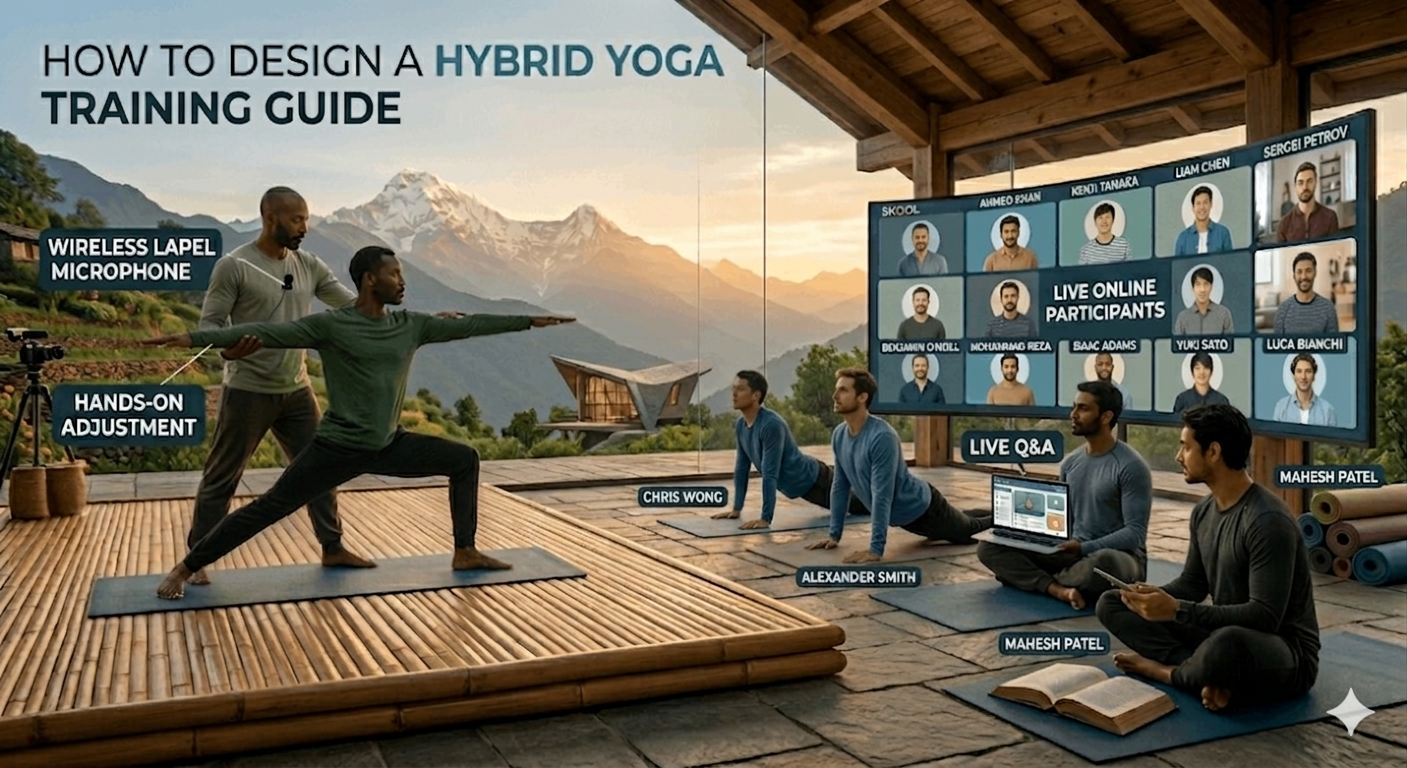
Hybrid yoga teacher training is rapidly emerging as the future of yoga education. Traditional in-person training is limited by geography, time, and flexibility, while online-only training often falls short in providing effective hands-on experience. The benefits of a hybrid training model include:
- Flexibility in terms of learning concepts through an online platform and at students’ own space
- Hands-on training through live adjustments and in-person workshops
- Globe-spanning reach, enabling teachers to reach students across the globe
- Community and support, which helps students remain motivated
From the point of view of teachers and schools, training through a hybrid model is effective in terms of scalability and tracking students’ progress through technology.
Step 1: Define Clear Learning Outcomes
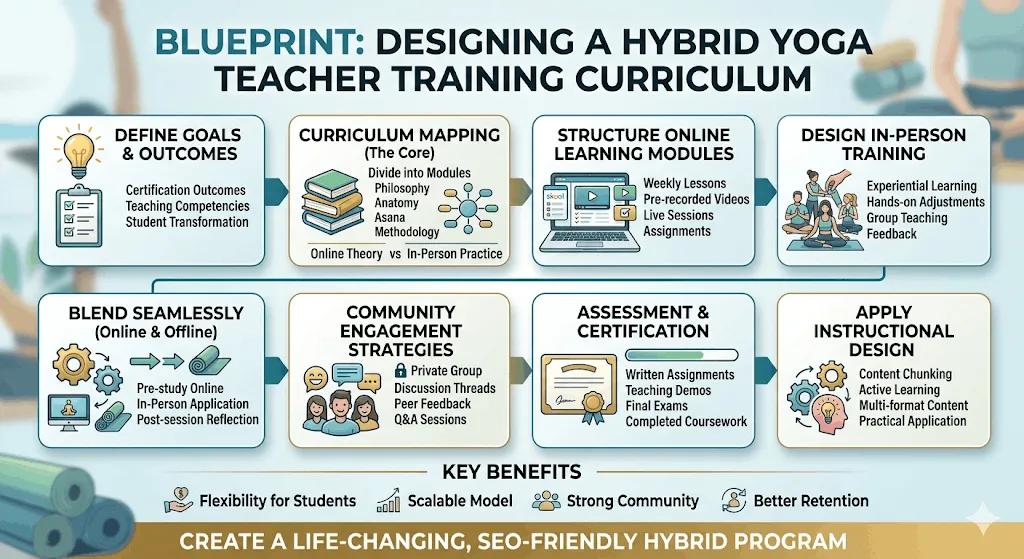
Every successful program begins with clear goals. Consider what you want your students to achieve. “What should students be able to do after completing my course?”
Examples of what students should be able to do:
- Confidently lead a 60-minute yoga class
- Apply anatomy and alignment principles safely
- Teach pranayama and meditation effectively
- Design yoga sequences for all levels
- Understand ethics, professional practices, and business management
Tip: Use language that students can easily understand to make your learning outcomes student-centered and relatable.
For example:
What you will be able to do by the end of this module is lead a beginner-friendly yoga class that incorporates breathwork, postures, and mindfulness.
Step 2: Curriculum Mapping Your Roadmap to Success
A curriculum map shows which skills and topics will be taught when, where, and how. It ensures students progress logically.
Sample Curriculum Map:
Step 3: Designing Online Modules
Online modules are your foundation for self-paced learning. They work well for theory-heavy topics like philosophy, anatomy, and teaching principles.
Platforms to Use:
- Kajabi: All-in-one platform for courses, membership, and marketing
- Skool: Community-based learning and engagement
- Thinkific: Course tracking and assessments
- Teachable: Intuitive course builder
Content Tips:
- Short, engaging videos (5-15 minutes)
- Interactive quizzes, downloadable worksheets
- Reflection prompts to encourage deeper understanding
- Weekly live Q&A sessions via Zoom/Google Meet
- Community forums for students to discuss with each other
For example,
An anatomy course includes videos of asana breakdowns, interactive diagrams of muscles, and a downloadable “Alignment Checklist” PDF.
Step 4: Immersive In-Person Sessions
In-person sessions are at the core of hybrid training. These include:
- Practical teaching experience
- Partner and group adjustments
- Hands-on workshops for props, alignment, and meditation guidance
Tip: The in-person sessions should be hands-on and nurturing. The students will learn faster through practice and feedback.
Step 5: Assessment & Certification
Effective assessment ensures students are ready to teach professionally.
Types of Assessment:
- Online quizzes for theory comprehension
- Assignments & reflections to encourage critical thinking
- Practical teaching assessments during in-person sessions
- Final teaching demonstration with instructor evaluation
Certification Tip: Align with Yoga Alliance Standards to enhance credibility. Offer digital certificates through your LMS platform and verify hours and competencies clearly.
Step 6: Using Tech Platforms Efficiently
A robust tech stack ensures smooth delivery, engagement, and tracking.
Course Platforms:
- Kajabi: Courses + automation + marketing
- Skool: Interactive community learning
- Thinkific: LMS + progress tracking
- Teachable: Easy course management
Live Sessions:
- Zoom: Breakout rooms and live adjustments
- Google Meet: Simple, accessible live sessions
Community & Engagement:
- Discord: Forums, voice, and text channels
- Facebook Groups: for sharing, announcements, and peer interaction
Marketing & Automation:
- Mailchimp—Email campaigns and sequences
- ActiveCampaign—CRM, automation, engagement tracking
Step 7: Building a Supportive Community
Community is also important in hybrid learning. The students need motivation and accountability.
Strategies:
- Online discussion boards with weekly prompts
- Guided group sessions and mentorship
- Teaching others and review by peers
- Access to alumni for mentorship
Tip: Publicly recognize and celebrate students’ achievements in your community.
Step 8: Best Practices for Maximum Impact
- Integrate theory with hands-on practice
- Summarize lessons in concise, interesting ways
- Add interactive elements, quizzes, etc.
- Solicit ongoing feedback to improve lessons
- Supply personalized assistance according to individual learning styles
- Add creative workshops, meditation sessions, etc.
Step 9: Marketing & Monetization
To make your hybrid program successful, market it strategically:
- SEO-optimized landing pages with keywords: “Hybrid Yoga Teacher Training”
- Social media promotion with testimonials and videos
- Email marketing campaigns via Mailchimp
- Paid advertising for targeted reach
Pro Tip: Share student success stories and highlight the blend of online flexibility and in-person immersion.
Step 10: Examples & Case Studies
- Yoga Project 200-Hour Hybrid Training: Blends live virtual lectures, self-paced online modules, and optional in-person weeks. Students earn a respected certification. Yoga Project
- The Peaceful Warrior Yoga Customizable Hybrid Format: Combines online learning with immersive retreats (e.g., Bali). Students have lifetime access to course content. The Peaceful Warrior Yoga
- Sri Sri School of Yoga – 200H Hybrid (India): Six weeks online + 8-day in-person immersion in Bangalore. Focus on practical alignment, meditation, and community sessions. Sri Sri School of Yoga
- Holistic Yoga School 200/300/500 Hour Hybrid Options: Self-paced online modules, live-streamed classes, and in-person retreats. Personalized mentorship included. Holistic Yoga School
- Breath Body Earth 300 Hour Hybrid (Guatemala): Online learning with live Zoom sessions, followed by a 10-day in-person retreat at Lake Atitlan. Breath Body Earth
Conclusion
A comprehensive hybrid yoga teacher training program will incorporate flexible online learning, in-person practice and immersion, community support, and professional assessment. Using this blueprint, it is possible to build a yoga teacher training program:
- Professional
- Engaging
- Credible
- Transformational
Your students will learn and gain confidence and skills in becoming yoga teachers.
Frequently Asked Questions (FAQs)
1. What is a hybrid yoga teacher training program?
A hybrid yoga teacher training program combines online learning and in-person sessions, allowing students to study theory digitally while gaining hands-on teaching experience in live or physical classes.
2. Is a hybrid yoga teacher training certification valid?
Yes, it is valid if the program follows standards set by organizations like Yoga Alliance. Many certified schools now offer hybrid formats.
3. Which platforms are best for creating hybrid yoga courses?
Popular platforms include Kajabi, Skool, Thinkific, and Teachable for managing content and students.
4. How long does a hybrid yoga teacher training program take?
Most 200-hour hybrid programs take 8–12 weeks, but some are flexible and self-paced, allowing students to complete them over a longer period.
5. What should be included in a hybrid yoga curriculum?
A strong curriculum includes online theory modules, in-person practice sessions, assessments, teaching practice, and community engagement for a complete learning experience.
Authored by: Laiba Ayaz