The Financial Literacy program teaches teens real money skills. Moreover, it helps them make smart choices. Many teachers, however, do not know where to start. Fortunately, this guide makes it easy. So, let us begin right now.
What Is a Financial Literacy Program
A financial literacy program teaches money skills. Furthermore, it covers saving and budgeting. It also explains how to invest. Moreover, it does all this in plain words.
Teens who finish this program make smart choices. Also, schools and parents want money education. Therefore, demand for this program is rising fast. So, now is the best time to build one.
Here is why this program matters:
- Good money habits start early here.
- Poor money choices get cut later.
- Teens learn to deal with real money.
- Trust with banks and budgets grows fast.
- Teachers get clear and simple goals.
Therefore, this is one of the best things you can build. So, start today and make a real impact.
Quick Overview Table
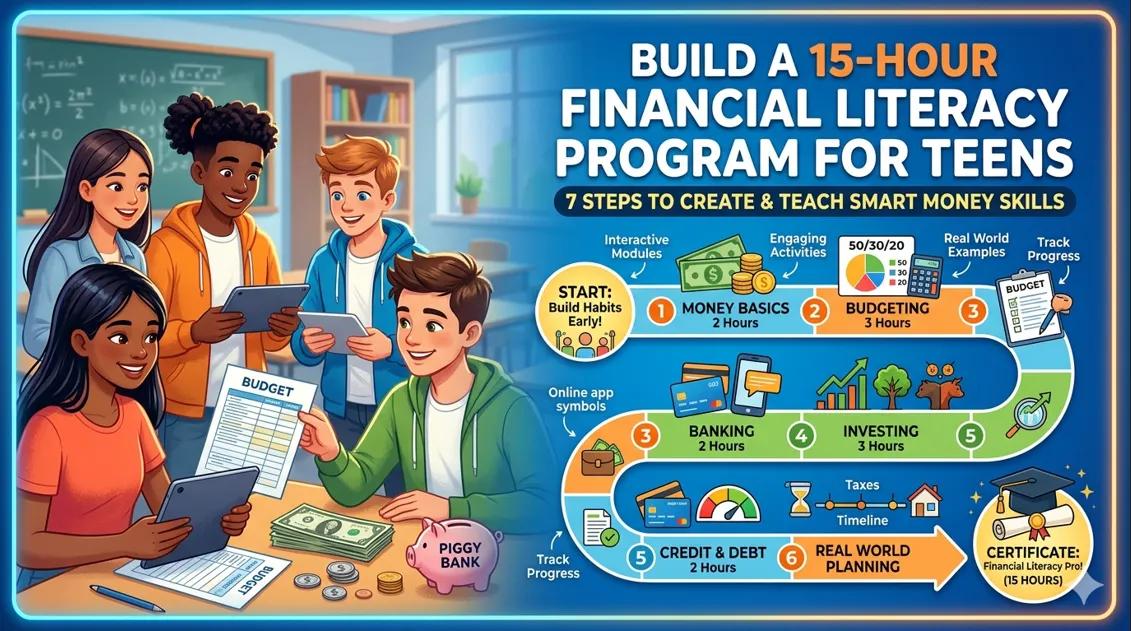
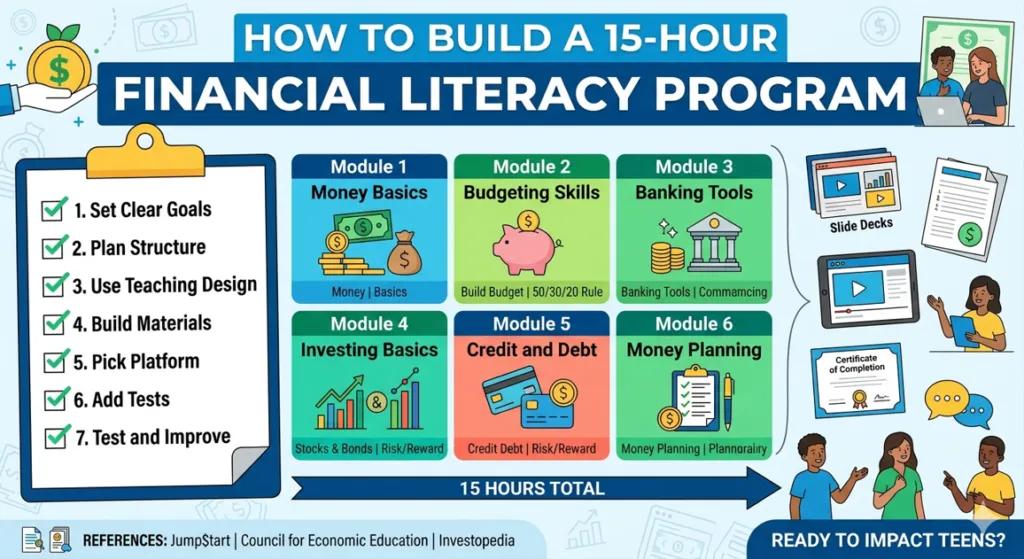
ModuleTopicTime1Money Basics2 Hours2Budgeting Skills3 Hours3Banking Tools2 Hours4Investing Basics3 Hours5Credit and Debt2 Hours6Money Planning3 HoursTotalFull Program15 Hours
Who Should Build This Financial Literacy Program
Many people can build this program. For example, teachers do this very well. Furthermore, former bankers make great course builders. Moreover, coaches and creators do too.
You are a great fit if you are:
- A course builder in education
- A finance pro ready to teach
- A creator building for teens
- A designer making structured courses
- A school wanting money classes
However, you do not need a degree. Instead, you just need a clear plan. So, that is truly all it takes.
Step 1: Set Clear Goals for Your Financial Literacy Program
First, define what success means to you. Moreover, clear goals guide every choice you make. Therefore, start here before writing any content. So, do not skip this step.
Ask yourself these short questions:
- What will learners know after finishing?
- What skills will they use each day?
- How will you track their progress?
- Who is your target learner?
For instance, a teen program needs budget basics. Meanwhile, an adult program needs investing too. Therefore, your learner shapes all your content. So, know your audience well.
Step 2: Plan Your Financial Literacy Program Structure
Next, split 15 hours into clear modules. So, learners move through content with ease. Moreover, a clear plan stops all confusion. Furthermore, it keeps you on track too.
Module 1: Money Basics (2 Hours)
- How money works in daily life
- Know your income and spending
- Set simple money goals
Module 2: Budgeting in Your Financial Literacy Program (3 Hours)
- How to build a simple budget
- The 50/30/20 rule made easy
- Free tools to track your spending
Module 3: Banking and Money Tools (2 Hours)
- Types of bank accounts made simple
- Simple vs. compound interest explained
- How to use online banking safely
Module 4: Investing Basics (3 Hours)
- What stocks and bonds are
- Risk and reward in plain words
- Start small with long term habits
Module 5: Credit and Debt in Your Financial Literacy Program (2 Hours)
- How credit scores work simply
- Use credit cards without going into debt
- Easy ways to pay off debt fast
Module 6: Real World Money Planning (3 Hours)
- Set short and long term goals
- Learn the basics of taxes
- Build a simple money plan
Also, space modules into short sessions. Furthermore, short sessions work best for teens. So, retention goes up greatly over time.
Step 3: Use Teaching Design in Your Program
Moreover, great content alone is not enough. How you teach matters just as much. Therefore, use proven teaching methods in your program. So, do not just lecture your learners.
Use these key methods:
- ADDIE Model: Analyze, Design, Build, Run, Review
- Bloom’s Goals: Move learners from recall to real use
- Story Learning: Real stories make lessons stick well
- Spaced Review: Go over ideas across many sessions
- Mixed Media: Mix videos, images, and worksheets
Therefore, these methods build a strong program fast. So, learners finish the course more often. Furthermore, they also get far better results.
Want to learn more about instructional design? Read: Instructional Design Services for Better Learning Outcomes
Step 4: Build Strong Teaching Materials
Also, your program needs great materials. Furthermore, every module needs clear support tools. So, create these for each module:
- Slide Decks: Clean, simple, and not text heavy
- Teacher Notes: Step-by-step guides for each session
- Student Sheets: Fun and useful practice tasks
- Case Studies: Real money group talk topics
- Module Tests: Short checks after each section
Furthermore, always use teen friendly examples. For instance, saving for a phone works well. Moreover, budgeting for a trip is very relatable. So, keep examples close to their real life.
Step 5: Pick the Right Platform for Your Financial Literacy Program
Similarly, your platform shapes how learners feel. Therefore, pick the right tool from the start. So, it saves you time and stress later. Moreover, the right tool makes teaching easy.
Top platforms to use:
- Kajabi: Best for selling premium courses
- Skool: Great for group based learning
- Teachable: Simple for new course builders
- Thinkific: Good for self paced courses
- ClickFunnels: Best for course sales funnels
Moreover, Zoom works well for live classes. Furthermore, Google Meet is free and easy. So, both are great options to use.
Step 6: Add Tests to Your Financial Literacy Program
Also, strong tests make your program stand out. Therefore, add clear checks all through your program. So, do not wait until the very end. Furthermore, early tests catch gaps in learning fast.
Your test plan should include:
- Pre Test: Check what learners know first
- Module Tests: Five to ten questions each time
- Real Tasks: Tasks like building a budget
- Final Project: A simple personal money plan
- Certificate: A shareable award at the end
Furthermore, awards push learners to keep going. So, they also raise your program value. Moreover, learners love sharing their certificates online.
Step 7: Test and Improve Your Financial Literacy Program
Finally, always test before your full launch. Specifically, run a small test group first. So, collect honest feedback from each person. Furthermore, this step saves you a lot of time.
Ask your test group these questions:
- Was the content clear and simple?
- Did the pace feel right to you?
- Were the materials fun and useful?
- What topics need more work?
So, use that feedback to fix weak spots. Therefore, every new version gets much stronger. Moreover, your learners will always notice the growth. Furthermore, better programs get better reviews too.
References
Conclusion
Building a financial literacy program takes a clear plan. Moreover, the right tools and teaching methods make it easy. Therefore, start today and give your learners real money skills for life.
FAQs
Q1: How long does it take to build a financial literacy program?
Most builders take four to eight weeks. It depends on team size and content depth.
Q2: Do I need a finance degree for this program?
No, you do not need one at all. Working with a finance expert helps a lot though.
Q3: What age group suits a 15-hour financial literacy program?
Teens aged 12 to 18 benefit most. It also works well for college students too.
Q4: Which platform suits this program best?
Kajabi suits premium programs very well. Meanwhile, Skool is great for group learning.
Q5: How do I keep teens engaged in a financial literacy program?
Use short lessons and fun real examples. Moreover, tests and worksheets help a lot too.
Q6: Should I add a certificate to my program?
Yes, always add one to your program. Certificates boost completion and raise program value.
Q7: Can I sell my financial literacy program as a digital product?
Yes, of course you can sell it. Kajabi and Teachable make this very simple today.
Authored by: Laiba Ayaz