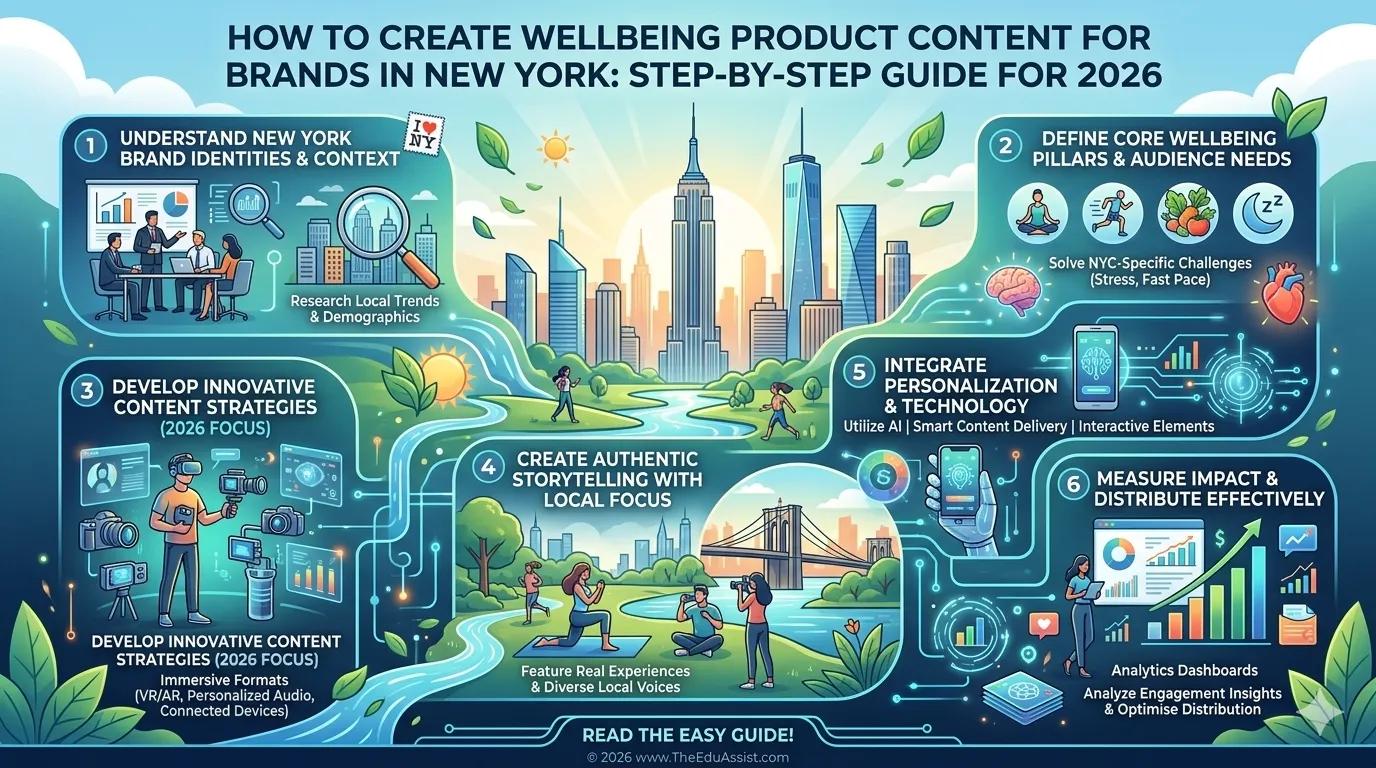
Employee wellbeing is no longer a “nice to have.” In 2026, it has become a strategic priority for brands that want stronger engagement, healthier teams, and sustainable performance. Across New York City, Buffalo, Rochester, Yonkers, and Syracuse, businesses are investing in well-being-related product content, including apps, workshops, webinars, digital programs, and internal learning initiatives.
However, many brands face a recurring problem:
- They want to promote wellbeing
- They have ideas for workshops or content
- But they struggle to turn those ideas into engaging, measurable, and scalable product content
This is where wellbeing product content strategy becomes essential.
Modern wellbeing content requires more than motivational messaging. It must combine:
- Instructional design
- Behavioral science
- Content development
- AI-enabled personalization
- Measurable learning outcomes
This guide explains how brands and creators can build wellbeing product content that creates real user impact in 2026.
Why Generic Wellbeing Content No Longer Works
Many organizations still rely on:
- One-off wellness webinars
- Static PDFs
- Generic mindfulness tips
- Passive awareness campaigns
These approaches often fail because they create awareness but not behavior change.
Research in digital learning and information systems shows that personalized and interactive systems improve engagement when users perceive relevance and usefulness. This principle strongly applies to wellbeing products where participation depends on personal motivation and habit adoption.
In line with eLearning trends 2026, users now expect:
- Short actionable lessons
- Personalized recommendations
- Measurable progress
- Mobile-first learning experiences
The Real Goal: Design for Behavior Change
The strongest wellbeing content does not simply inform — it helps people change routines.
Examples:
- Building healthier daily habits
- Reducing stress triggers
- Improving focus and recovery
- Strengthening communication and resilience
To achieve this, brands should structure content around:
- Awareness
- Action
- Reinforcement
- Measurement
This transforms content into a behavior-change system, not just information delivery.
Step 1: Define the Audience and Their Real Problems
Before writing any lesson or workshop, define the audience clearly.
Examples:
AudienceCommon NeedCorporate employeesStress managementManagersBurnout preventionRemote teamsConnection and focusFoundersEnergy and resilienceStudentsProductivity habits
For example, a finance team may need burnout recovery content, while remote staff may need boundary-setting and communication modules.
Strong content development begins with real user pain points.
Step 2: Build a Multi-Format Content Ecosystem
Wellbeing content performs best when offered across multiple formats.
Use a mix of:
- App-based micro lessons
- Live webinars
- Workshops
- Downloadable guides
- Worksheets
- Email nudges
- Reflection prompts
This supports different learning styles and improves repetition.
It also reflects strong custom eLearning strategy, where content is delivered in ways users will actually consume.
Step 3: Use Instructional Design, Not Just Inspiration
Many wellbeing programs fail because they are inspirational but not instructional.
Use clear learning design principles:
- Define outcomes
- Break content into modules
- Include practice activities
- Reinforce learning over time
- Assess progress
For example:Module Topic: Managing Stress at WorkOutcome: Learner can identify triggers and use a 3-step reset method.
This approach creates measurable outcomes instead of vague motivation.
Step 4: Apply Microlearning for Busy Users
Wellbeing users often have limited attention and packed schedules.
Use microlearning formats such as:
- 3-minute breathing lesson
- 5-minute energy reset video
- 1-question reflection prompt
- 7-minute focus routine
Short lessons improve completion and fit naturally into workdays.
This is one of the most practical L&D strategies for wellbeing programs in 2026.
Step 5: Use AI to Scale Personalization
AI can help wellbeing brands create more relevant experiences.
Use AI for:
- Content drafts and ideation
- Personalized prompts
- Adaptive learning paths
- Engagement reminders
- Sentiment tagging and user feedback analysis
Research on AI learning adoption suggests people engage more when systems feel helpful, easy to use, and personally relevant.
Examples:
- “Feeling overwhelmed today?” → serve stress reset content
- “Low engagement this week?” → recommend shorter micro lessons
Used responsibly, AI supports scale without losing relevance.
Step 6: Measure What Actually Matters
Wellbeing content should be measurable.
Track:
- Completion rates
- Repeat engagement
- Session attendance
- Self-reported confidence or stress change
- Behavior streaks
- Satisfaction scores
Avoid vanity metrics alone.
The real question is:Did the content help users take healthier actions consistently?
Step 7: Design With Accessibility and Global Relevance
For modern brands, wellbeing content often serves distributed teams.
Ensure:
- Simple language
- Inclusive examples
- Mobile usability
- Captioned videos
- Culturally neutral visuals
- Time-zone friendly delivery
This increases reach and trust.
Quick Comparison Table: Content Formats for Wellbeing Brands
FormatBest ForKey AdvantageApp MicrolearningDaily habitsHigh repeat usageLive WebinarGroup learningReal-time engagementWorkshopDeeper skill buildingHigh impactDownloadable ToolkitOngoing supportPractical reference
Cost Reality Check: Building Professional Wellbeing Content
CategoryEstimated CostInstructional design$2,000 – $7,000Video & design assets$1,000 – $5,000AI tools / automation$50 – $300 monthlyLMS / app toolsVariableAnalytics setup$500 – $3,000
Brands that invest in structured learning experiences often outperform those relying on random content campaigns.
Unique Perspective: Wellbeing Content Is Now a Product, Not a Campaign
In 2026, the biggest shift is this:Wellbeing is no longer just an HR initiative.
It is now a digital product experience.
That means users expect:
- Personalization
- Progress tracking
- Engaging UX
- Ongoing value
- Measurable results
Brands that think like product builders will win.
Final Thoughts
For brands and creators in New York, wellbeing content represents a major opportunity to improve employee experience and brand value.
But strong results require more than motivational posts.
By combining:
- Instructional design
- Behavioral science
- AI-supported personalization
- Microlearning delivery
- Clear measurement systems
you can build wellbeing product content that truly changes behavior and scales effectively.
References
- https://aisel.aisnet.org/cgi/viewcontent.cgi?article=1033&context=icis2022
- https://www.gallup.com/workplace/349484/state-of-the-global-workplace.aspx
- https://www.datacamp.com/blog/how-to-learn-ai
FAQs
What is wellbeing product content?It includes digital lessons, webinars, workshops, app experiences, guides, and tools designed to improve health, resilience, and workplace wellbeing.
Why do many wellbeing programs fail?They often focus on awareness only, without behavior change systems, reinforcement, or measurable outcomes.
How can AI help wellbeing content creation?AI can support personalization, reminders, engagement analysis, content drafts, and adaptive learning pathways.
Why is microlearning effective for wellbeing?Short lessons fit busy schedules and help users apply small habits consistently over time.
How can TheEduAssist help brands build wellbeing content?Through theeduassist.com consulting services, edu-assist supports brands with custom eLearning, instructional design, content development, and scalable digital wellbeing learning systems.
Authored By: Sofia Arif